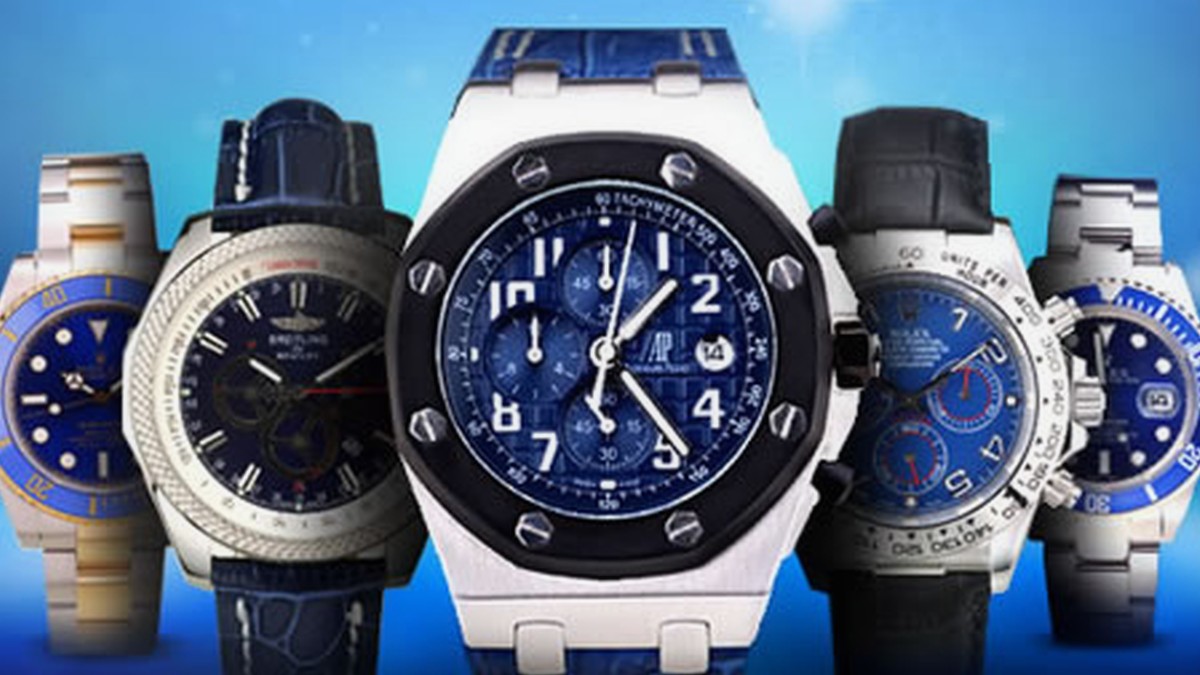
Research the reference before the retailer
The original online.htm page advised buyers to compare sites, read reviews and learn the specifications of the model from the manufacturer. That remains useful advice, but the order matters. Before comparing sellers, define exactly which AP family you want. “Royal Oak replica” can mean a 39 mm Jumbo, 41 mm Selfwinding, 41 mm Chronograph or a much larger Offshore-style watch.
Once the target is clear, seller claims become easier to test. If the listing says 15510-style, the case size, dial architecture and bracelet should match a 41 mm Selfwinding Royal Oak—not an Offshore or a Jumbo.
Build a model sheet before you pay
| Field | Record this | Why it matters |
|---|---|---|
| Reference family | e.g. 15510, 16202, 26240, 26420 | Stops different generations being mixed together |
| Case size | 37 / 39 / 41 / 43 mm etc. | AP wears large; size changes proportions |
| Dial pattern | Petite / Grande / Méga Tapisserie | Pattern scale is visible immediately |
| Movement | Exact movement name or architecture | Controls functions, thickness and serviceability |
| Bracelet/strap | Integrated steel, rubber, leather | Changes case stance and finishing priorities |
| Water claim | Untested / pressure tested / stated rating | Avoids treating marketing copy as evidence |
Ask for evidence that changes the decision
More photos are not automatically better. Ask for views that answer specific questions: a straight dial shot to judge alignment, a side profile to judge thickness, a bracelet/clasp view to judge finishing and fit, a caseback photo to evaluate the movement claim, and a short function video for chronograph or date operation.
For a chronograph, ask for start, stop and reset in one continuous video. For a date model, ask to see the date advance. For water use, ask for a pressure-test result on the actual watch rather than a generic model rating.
Price is a weak quality signal
The old site quoted prices as low as $70 for copies. That reflects an earlier market and should not be used as a current benchmark. More importantly, price alone has never been a reliable technical specification. Two watches at very different prices may share the same movement; two listings at the same price may use very different cases or bracelets.
Use price only after you have compared the actual configuration. A higher cost is meaningful when it buys something identifiable: a better movement, better-finished bracelet, more accurate case proportions, individual QC or a stronger return policy.
Seller terms belong on a separate checklist
Watch quality and transaction quality are related but not identical. A technically good watch can still be a poor purchase if the seller does not clearly state shipping, replacement and return terms. Conversely, polished policies do not prove the individual watch is correctly built.
- Confirm what happens if the delivered watch differs from the QC photos.
- Confirm whether return shipping, restocking fees or exchange-only conditions apply.
- Keep the exact listing, QC media and written movement claim.
- Avoid claims such as “guaranteed customs clearance” or “impossible to distinguish” as substitutes for a real policy.
- Use a payment method appropriate to your risk tolerance and local law.
Use a two-stage QC process
Stage one happens before shipment: check the watch visually and functionally using the seller’s individual QC. Stage two happens after delivery: inspect the watch under consistent lighting, test functions, check bracelet/clasp operation and have water resistance tested before exposing the watch to water.
The AP QC checklist turns this into a repeatable sequence.
Shortlist by use case
| Use case | Model direction | Main trade-off |
|---|---|---|
| Thin integrated-bracelet look | 39 mm Jumbo family | Thinness and bracelet finishing become critical |
| Modern everyday Royal Oak | 41 mm 15500/15510 family | Large wrist presence; dial and bracelet details exposed |
| Integrated-bracelet chronograph | 26240 family | More movement complexity and greater thickness |
| Bold sports chronograph | Royal Oak Offshore | Size, strap stance and chronograph geometry |
| Visual impact over architecture | Simpler movement build | Can be easier to service, but less mechanically similar |
Use manufacturer material as a map, not a promise
Official AP pages are useful because they tell you what the intended watch actually is: the nominal size, material, dial pattern, bracelet or strap, and calibre functions. That information should guide your comparison. It should not be copied into a replica listing as if the replica automatically inherits the same water resistance, material grade or power reserve.
When a listing conflicts with the genuine reference in a visible way—wrong case size, wrong dial texture, wrong subdial layout or wrong strap type—resolve that conflict before thinking about factory reputation.
Keep a purchase record
Save the listing, movement description, QC photos, function video and written return terms together. If a problem appears later, that record is more useful than a screenshot of a seller’s homepage. It also helps you evaluate whether future purchases from the same source are consistent.
For expensive or complicated watches, the documentation process should become stricter, not more relaxed. A chronograph with several moving displays gives you more functions to verify than a simple time-and-date watch.