Material claims are easier to write than to verify
Replica listings commonly use material names—stainless steel, ceramic, carbon, titanium—as shortcuts for quality. The useful question is not whether the material sounds premium, but whether the claim is plausible and whether the finishing suits the target reference.
Steel: finishing matters more than a grade label
For Royal Oak-style watches, brushing direction, polished bevels and bracelet transitions dominate the visual result. A seller can advertise a specific steel grade, but you usually cannot prove alloy composition from a photo. What you can inspect is surface quality, edge definition and consistency.
Ceramic: color and edge definition
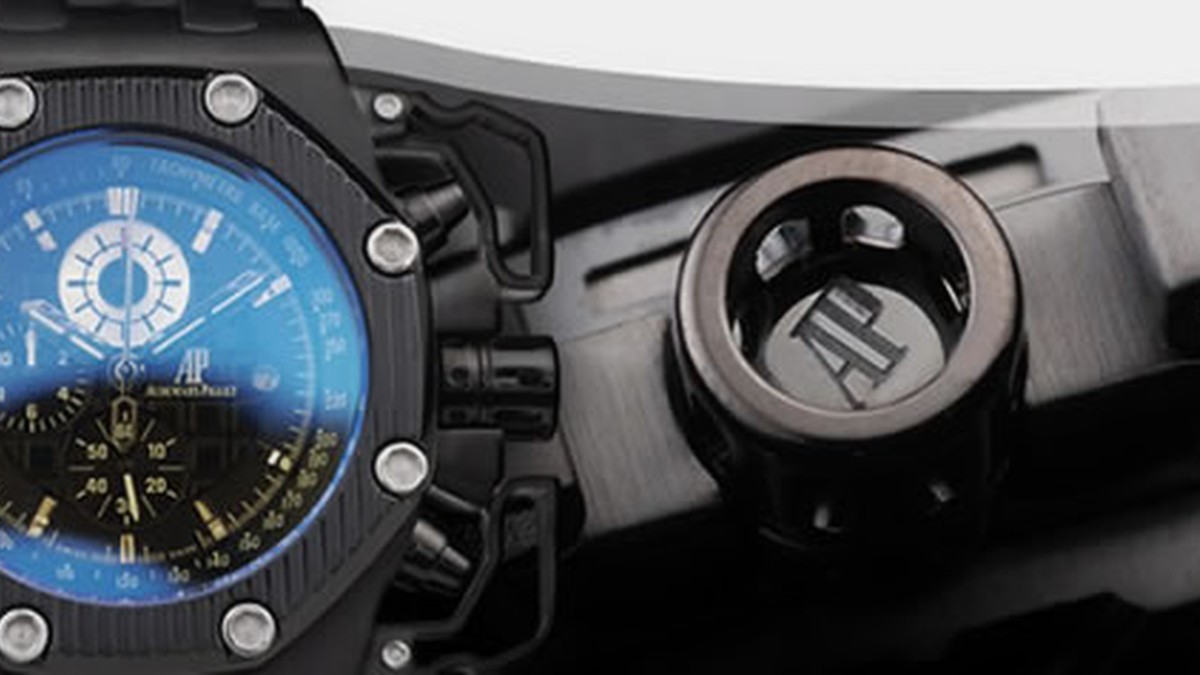
Ceramic appears across AP’s modern catalogue, especially in Offshore and selected Royal Oak references. Replica ceramic parts should be judged for uniform color, clean machining around screw recesses and consistent transitions. Be cautious about assuming that scratch resistance means the component is immune to chipping or impact damage.
Titanium: lightness is only one clue
Titanium can change the wrist feel dramatically, but weight alone cannot prove exact material specification. Compare color tone, brushing and the expected reference configuration.
Carbon and composite claims
Older Offshore references helped popularize forged-carbon aesthetics. Modern listings may use “carbon” loosely for several composite-looking materials. Request close macro photos and avoid treating a surface pattern as proof of manufacturing method.
Verification matrix
| Claim | Can photos help? | What needs stronger evidence? |
|---|---|---|
| Steel finish | Yes: brushing, bevels, machining | Exact alloy grade |
| Ceramic | Yes: color, machining, surface | Material composition and impact durability |
| Titanium | Partly: color/finish; weight may help | Exact alloy and treatment |
| Carbon/composite | Yes: surface pattern and machining | Manufacturing method/material formulation |
| Water resistance | No, not reliably | Individual pressure test |
Choose material after the reference
A technically good ceramic case is still wrong if the target reference is steel. Configuration consistency matters more than collecting premium-sounding materials on one watch.
Finish can identify a bad material execution even when composition is unknown
You may not be able to verify an alloy from a photograph, but you can still reject poor execution. Uneven brushing, soft screw recesses, chipped coatings and inconsistent color between case, bezel and bracelet are visible. Material verification and finishing evaluation are separate tasks.
Mixed-material references require color consistency
Some AP references intentionally combine ceramic, precious metal, titanium or rubber. A replica should match the intended combination. If several metal-toned components are supposed to match, check them in the same lighting; different plating or surface treatments can create obvious color shifts.
Coatings wear at predictable contact points
On coated parts, inspect clasp edges, bracelet articulation points, crown/pusher edges and the underside of the case. These areas receive more friction than broad flat surfaces. Seller photos of a new watch cannot predict long-term wear, so user reports about edge wear can be valuable.
Material choice affects repair options
Steel can often be refinished by a skilled professional, while ceramic chips or complex coatings may require replacement components. Consider future repairability if the watch is intended for frequent use.
Material claims should survive configuration checks
Before debating whether a case is truly ceramic or whether a bracelet uses a particular steel grade, confirm that the material belongs on the target reference. Replica listings sometimes combine popular features—black ceramic bezel, rose-gold tone, carbon texture—because they look expensive together. A reference-specific comparison asks a simpler question first: did AP actually use that combination on the watch being copied?
After configuration is confirmed, inspect machining and finishing. Ceramic screw recesses should look clean rather than chipped; titanium should not be polished like chrome if the reference is primarily brushed; plated gold-tone components should match each other across case, clasp and bracelet. These visual checks do not prove chemistry, but they do reveal whether the build is internally consistent.
Brushing direction is an underrated material check
On Royal Oak-style cases and bracelets, the direction of the brush is part of the design. A component can be made from a good material and still look wrong if the brushing runs inconsistently across links or if polished bevels are too wide. Compare adjacent surfaces under a single light source; changes in direction should look deliberate rather than random.
This is especially important on replacement bracelets, where the case and bracelet may come from different suppliers and show different grain or color.