Architecture before nationality
The old site used “Japanese quartz” as a broad quality description. A more useful movement guide starts with what the watch is supposed to do. A simple time-and-date Royal Oak, an ultra-thin Jumbo and an Offshore flyback chronograph require very different movement architectures. Whether a movement is Japanese, Swiss or Asian tells you less than its dimensions, functions and serviceability.
Quartz: practical, visually different
Quartz can be accurate and low maintenance, but it usually changes the character of a watch designed around a mechanical calibre. Seconds behavior, chronograph subdials, caseback appearance and crown interaction may differ. That can be acceptable in a budget build, but it should be described honestly.
MIYOTA 9015: useful for simple automatic builds
The MIYOTA 9015 is a 28,800 vph automatic movement with date and a relatively thin architecture. It can be a practical choice in time-and-date replicas where reliability and serviceability matter more than copying AP movement architecture. It is not, however, a 4302 or 7121 clone.
Decorated or clone-style AP movements
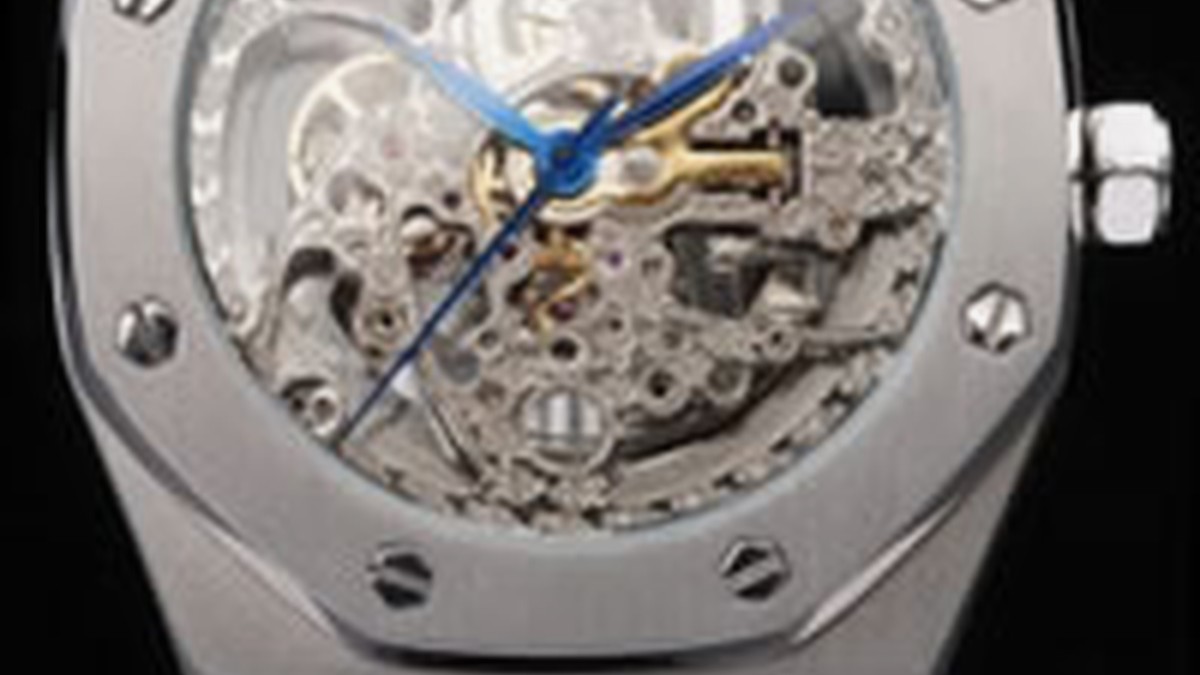
Some movements are decorated to resemble AP calibres; others are built to reproduce more of the bridge layout or functional architecture. “Clone” has no single industry definition. Ask whether the movement is merely cosmetically decorated, whether the balance is located where the display suggests, and whether replacement parts or service are realistic.
Chronograph movements change the dial
For Royal Oak Chronograph and Offshore replicas, the movement determines subdial placement and case thickness. A technically reliable chronograph can still be visually wrong if its subdials do not match the target reference. Conversely, a visually convincing layout is less useful if the chronograph is decorative or resets poorly.
Movement comparison table
| Movement direction | Strength | Trade-off | Best fit |
|---|---|---|---|
| Quartz | Low maintenance, inexpensive | Mechanical behavior and layout may differ | Budget visual build |
| MIYOTA automatic | Serviceable, established architecture | Not an AP clone | Simple time/date Royal Oak style |
| Decorated automatic | Closer caseback appearance | Decoration may not reflect architecture | Buyers prioritizing visual caseback |
| Clone-style architecture | Potentially closer dimensions/functions | Variable serviceability and execution | Reference-focused build |
| Mechanical chronograph | Functional counters | Thickness and layout vary by calibre | Royal Oak/Offshore chronograph |
Questions worth asking before purchase
- What is the exact movement designation, not just “Swiss” or “clone”?
- Does every visible complication function?
- What is the approximate beat rate and power reserve?
- Can the movement be serviced locally or are parts proprietary?
- Does the movement force a thicker case or different date/subdial position?
9015 and 8215 are not interchangeable descriptions
MIYOTA lists the 9015 as a 3.90 mm, 28,800 vph automatic with quick date setting. The older 8215 is thicker at 5.67 mm and runs at 21,600 vph with an approximately 42-hour running time. Both can be practical movements, but they can affect case thickness and seconds behavior differently. A seller who says only “Japanese automatic” is leaving out information that can change the watch.
Movement height becomes case geometry
Stem height, movement thickness and hand stack all have physical consequences. If the chosen movement does not fit the intended case architecture, the crown may sit too high or low, the dial may need spacers, or the caseback may become deeper. This is why movement selection should be evaluated visually as well as mechanically.
Serviceability is a real ownership feature
A movement that can be replaced or serviced by a competent independent watchmaker may be preferable to a visually impressive clone architecture with scarce parts. Ask whether the movement is intended to be serviced or simply replaced if it fails, and factor that into the purchase price.
Do not infer movement identity from rotor engraving
Rotors, bridges and decorative plates can be changed without changing the underlying gear train. A caseback photo is useful, but it should be interpreted alongside movement dimensions and functions rather than treated as definitive proof.
Choose the movement around the failure mode you can accept
Every movement choice creates a different compromise. A simple Japanese automatic may be easier to replace but can make the caseback and stem geometry less reference-correct. A clone-style movement may solve those visual problems while creating a more specialized service problem. A chronograph movement can provide real function but may force thicker cases or slightly different counter positions.
This is why the correct question is not “Which movement is best?” but “Which compromise is least important to me?” Buyers who rarely look through the caseback may prefer serviceability. Buyers chasing a Jumbo silhouette may prioritize movement height. Offshore chronograph buyers may prioritize correct subdial geometry and full function even if future repair is more complicated.