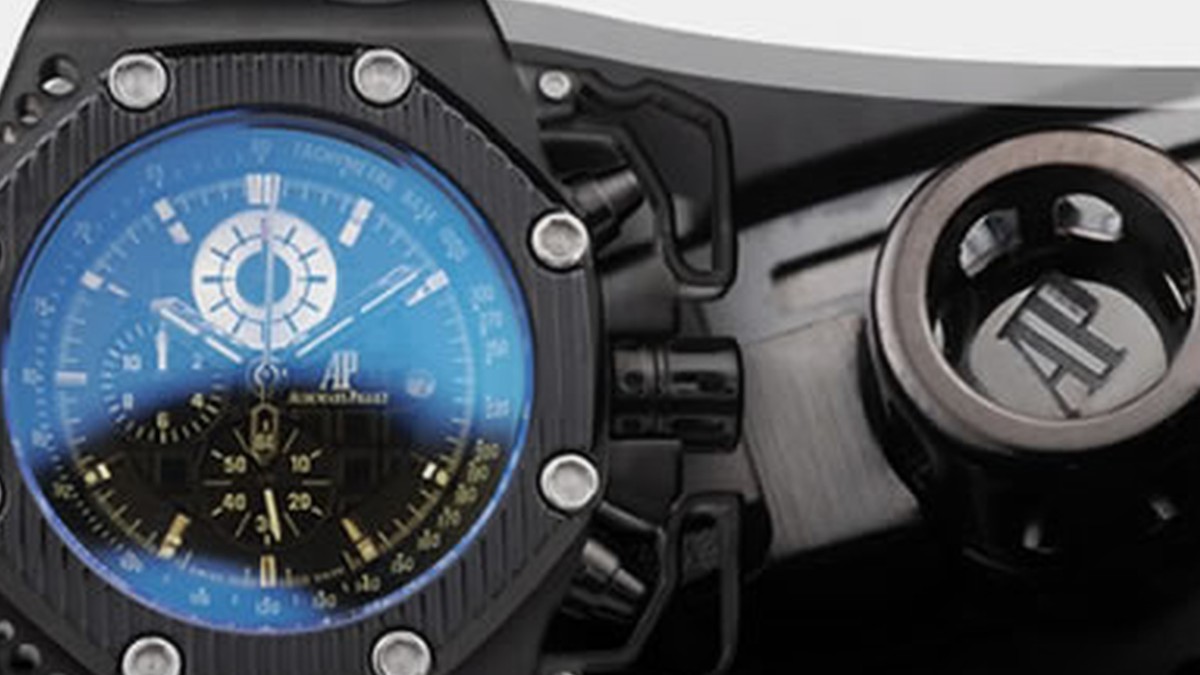
AAA, 1:1 and super clone are not standards
The original site used “good copy” and price ranges as rough quality signals. Modern seller labels are more elaborate but no more standardized. One seller’s “AAA” can be another seller’s entry level. The useful alternative is to score what can actually be inspected.
The AP Replica 10-point score
| Area | Points | Question |
|---|---|---|
| Reference consistency | 1 | Do size, dial, bezel, bracelet/strap and movement claim belong to the same target generation? |
| Case geometry | 1 | Are bezel, mid-case, crown and thickness proportions coherent? |
| Finishing | 1 | Are brushing and polished bevels crisp and directionally consistent? |
| Dial/Tapisserie | 1 | Is texture scale correct and are markers/printing aligned? |
| Date/subdials | 1 | Are apertures and counters positioned correctly? |
| Bracelet/strap | 1 | Does it articulate and fit the case correctly? |
| Movement function | 1 | Do promised functions work? |
| Movement suitability | 1 | Does architecture support the intended profile/layout? |
| QC evidence | 1 | Are individual-watch photos/video adequate? |
| Seller terms | 1 | Are return/replacement terms clear and usable? |
A score is not a laboratory certification. Its purpose is to stop one flashy feature—such as a decorated rotor or ceramic bezel—from dominating the whole buying decision.
Visual accuracy and mechanical quality are separate
A watch can be visually convincing but mechanically inconvenient to service. Another can use a reliable movement but have obvious proportion errors. Decide which dimension matters most to you before comparing price.
Reference consistency deserves its own point
Many weak builds mix a modern dial with an older case, generic bracelet or unrelated movement decoration. These components can each look good independently yet fail as one coherent reference.
QC quality is part of product quality
If you cannot see the individual watch before shipment, you are effectively buying a model description rather than the actual piece. Good QC cannot guarantee long-term reliability, but it can catch alignment, damage and functional problems before shipping.
Use the score to compare two watches, not to declare one “perfect”
A nine-point watch for one buyer may still be a poor choice if the missing point is serviceability or case thickness. The score works best as a structured comparison tool.
Score the same watch twice
One useful technique is to score the listing first and then score the delivered watch again. The gap between those two scores tells you something about seller consistency. A watch that photographs well but arrives with weaker finishing or different movement details should not be treated as the same product.
Weight the score around your own priorities
The default 10-point system gives each category equal weight, but buyers can adjust mentally. If you care most about movement serviceability, that category deserves more weight. If you care about visual Royal Oak accuracy, case, bracelet and dial may dominate.
Factory name is secondary evidence
Factory reputation can be useful context, but it should not override the actual watch. Production batches change, parts are revised and sellers can mislabel factories. Treat the name as a clue that helps you know what to inspect, not as a replacement for QC.
Consistency beats one spectacular component
A watch with an excellent dial but weak bracelet, or an impressive movement inside a badly proportioned case, is usually less convincing than a balanced build with no glaring weakness. The Royal Oak design rewards coherence.
A quality score should be repeatable across sellers
The advantage of a scorecard is consistency. Apply the same ten categories to two watches from different sellers and keep the photos that support each score. This prevents one seller’s marketing vocabulary from setting the standard. Over time, your own score history also becomes more useful than anonymous claims about a factory name.
When two watches finish with similar totals, look at the distribution of points. One may be stronger mechanically while the other is stronger visually. That difference matters more than a one-point total gap and explains why “best replica” is usually a poor universal label.
Track recurring defects by model family
Some weaknesses repeat because they are tied to the architecture: Jumbo-style watches often expose thickness problems, 41 mm Royal Oaks expose bracelet and dial-proportion issues, and Offshore chronographs expose subdial geometry and pusher function. Recording defects by family helps you know what to inspect first on the next watch rather than starting from a generic checklist every time.