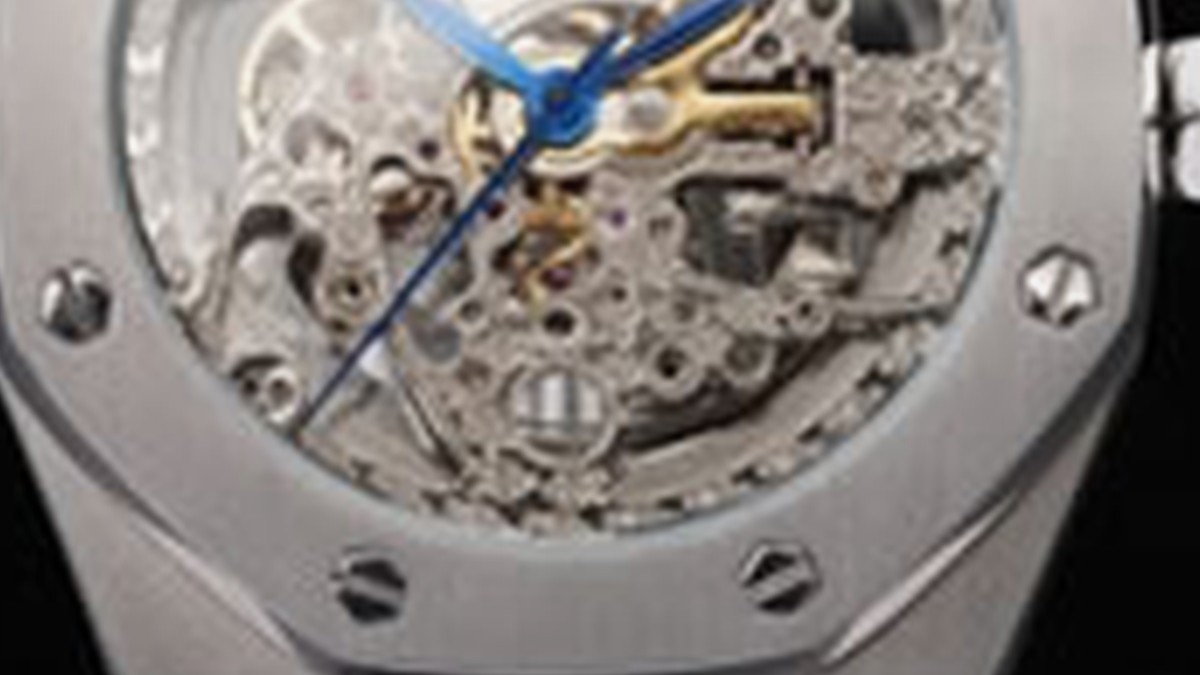
The Jumbo is about thinness, not just 39 mm
The 15202 and 16202 both belong to the Royal Oak “Jumbo” lineage and preserve the 39 mm format associated with the original design. The main mistake in replica comparisons is to reduce the issue to diameter. What makes the Jumbo distinctive is the relationship between 39 mm width, slim case, Petite Tapisserie dial and thin movement architecture.
16202: the movement generation changed
AP replaced the long-running Calibre 2121 with Calibre 7121 for the 16202 generation. AP’s own historical material describes a 29.6 mm movement, 3.2 mm thickness, 28,800 vph frequency and roughly 52–55 hours of power reserve depending on the reference documentation. That architecture matters because a much thicker substitute movement can change the case profile even if the dial looks convincing.
Petite Tapisserie is a scale problem
A Jumbo-style dial should not be judged with the same texture expectation as a 41 mm 15510 or an Offshore. Petite Tapisserie creates a finer pattern. When the texture is too large, too deep or too glossy, the dial can look like a scaled-down version of another Royal Oak rather than a Jumbo.
Caseback and date position expose movement compromises
Replica builders sometimes use a reliable movement that does not share the same dimensions as the genuine calibre. That can affect stem height, date position, rotor appearance and caseback depth. These compromises are not automatically unacceptable, but buyers should know whether they are choosing reliability, visual architecture or a balance of both.
15202 vs 16202 checklist
| Area | 15202 / 2121-era focus | 16202 / 7121-era focus |
|---|---|---|
| Case | Ultra-thin Jumbo stance | Same 39 mm design language with new movement generation |
| Dial | Petite Tapisserie | Petite Tapisserie on many references; configuration-specific exceptions exist |
| Movement | 2121 architecture | 7121 architecture, 28,800 vph, higher reserve |
| QC | Thinness, dial texture, bracelet | Thinness, caseback/movement claim, dial/bracelet consistency |
Buying decision
If you are buying for the classic Jumbo look, prioritize total thickness, bracelet articulation and dial scale before decorative movement engraving. A watch that looks thin and coherent on the wrist can be a more convincing Jumbo-style build than a thicker watch with a heavily decorated movement.
A thick “Jumbo” is the wrong compromise for many buyers
Because the Jumbo identity is tied to thinness, adding several millimetres of case thickness changes the character more than it might on a larger sports watch. A thicker movement may be reliable and affordable, but buyers should understand that they are choosing a 39 mm Royal Oak-style watch rather than a close Jumbo proportion.
Caseback decoration should come after case geometry
Transparent casebacks make movement decoration tempting to prioritize. But a beautiful rotor cannot correct an over-thick mid-case or a date window placed for a different movement. First inspect the silhouette; then decide how much the movement view matters to you.
Bracelet taper completes the thin-case effect
The Jumbo’s wrist presence is not created by the case alone. Bracelet proportions and first-link behavior help the watch appear broad yet thin. A bracelet that is too chunky can make a correctly sized case feel heavier and more modern than intended.
The date system is part of the thinness equation
Moving the date through a thin movement and keeping the aperture correctly placed is a packaging problem. On replica builds using unrelated movements, the date wheel may sit at a different radius or height. That can lead to a date window that is subtly misplaced, a font that looks too small, or a thicker dial/movement spacer stack. Check date position together with case thickness rather than treating them as separate details.
The better Jumbo-style replicas tend to look coherent from front, side and caseback at the same time. If one view looks excellent and another requires major explanation, that usually reveals where the movement or case compromise was made.
Why the Jumbo deserves its own QC order
Inspect the silhouette before macro dial details. If the case is too thick, bracelet too heavy or first-link stance wrong, the watch has already lost much of the Jumbo character. Only after the overall profile is convincing should you spend time on dial texture, date font and movement decoration.